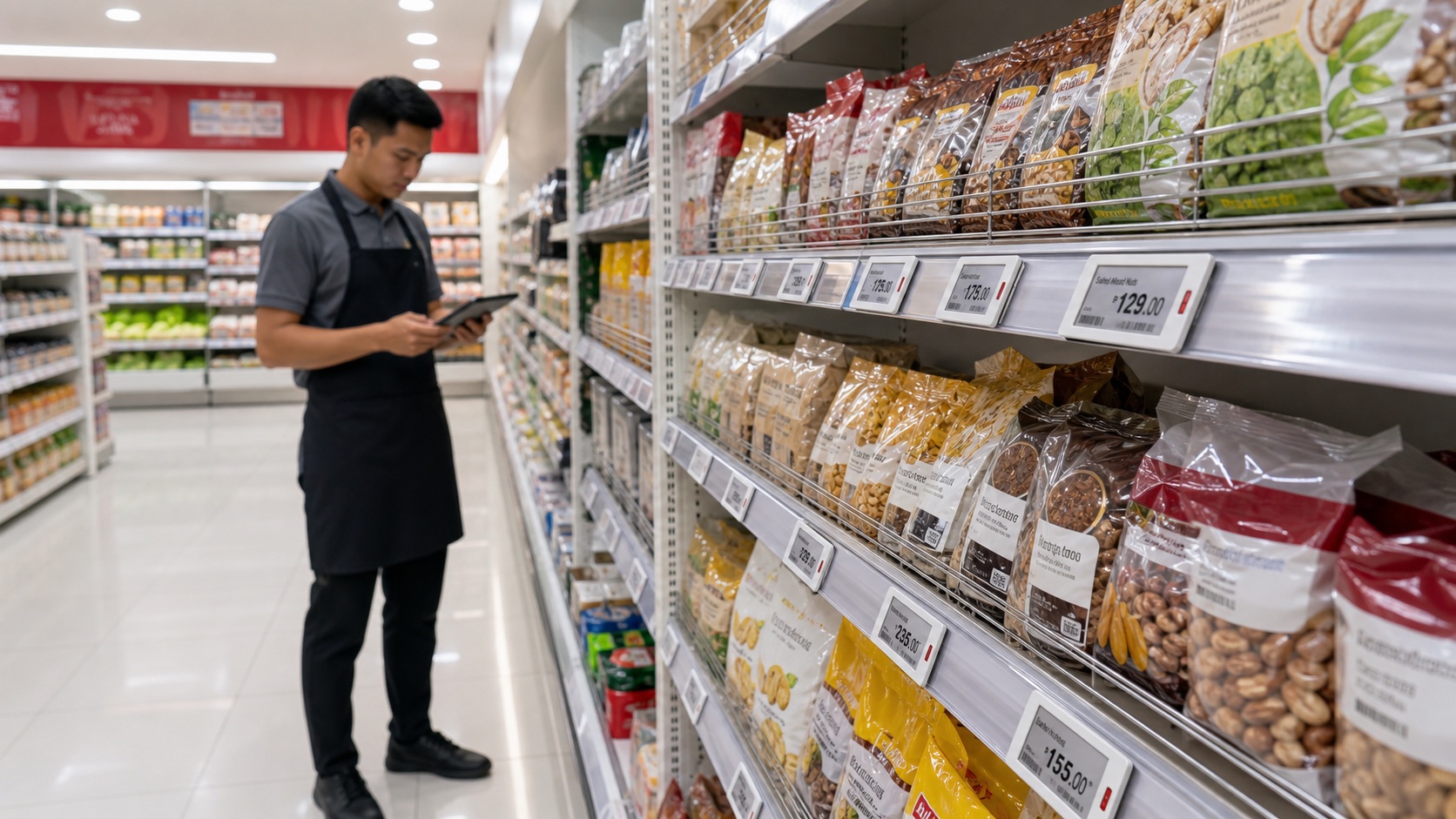
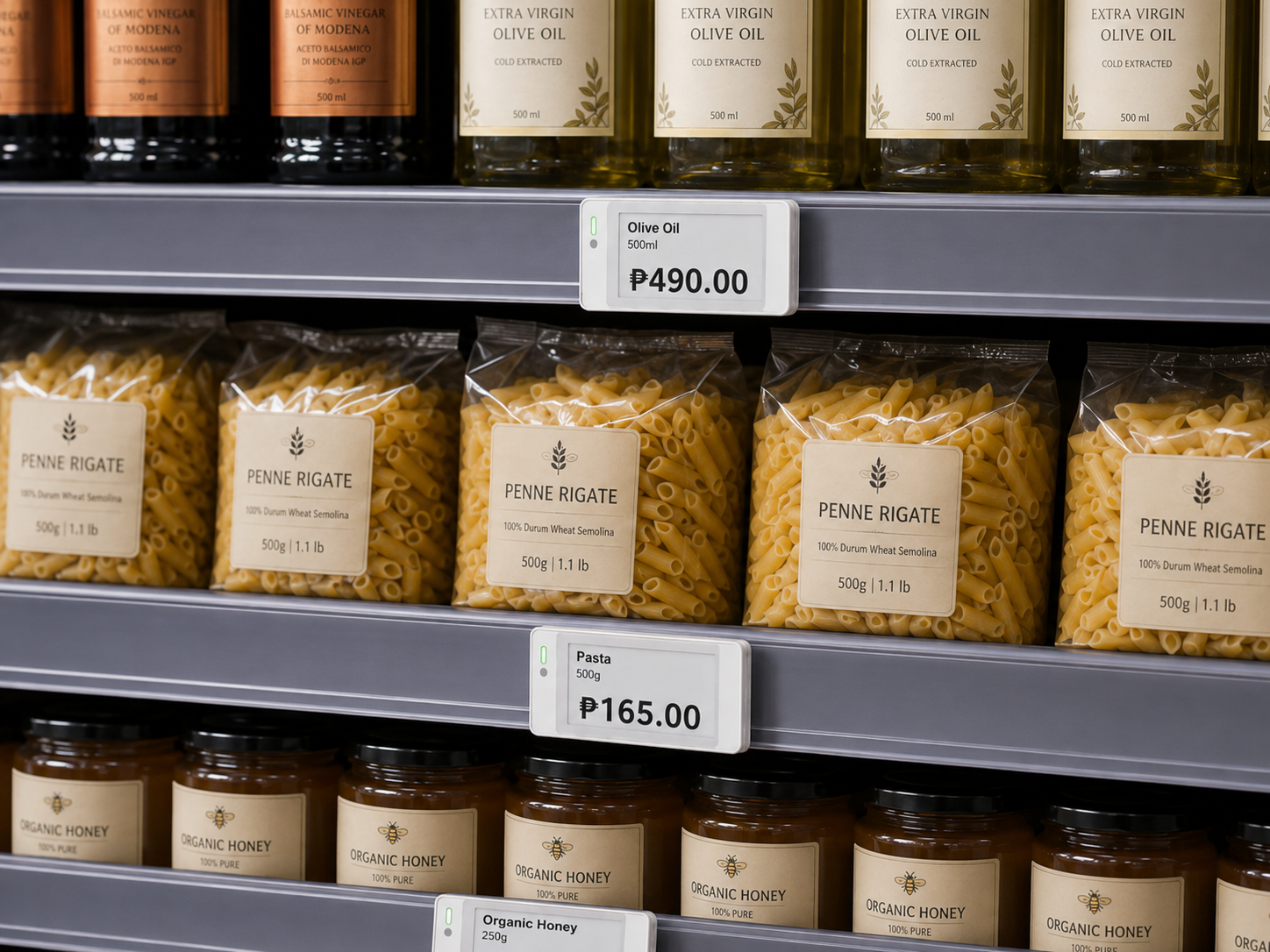
Electronic shelf labels replace manually printed shelf-edge pricing with centrally managed digital displays. But the labels themselves are only one part of the system. A successful deployment connects shelf hardware, wireless communication, management software, and the retailer’s existing product and pricing data.
If you are evaluating the operational case before reviewing the system architecture, start with the benefits of digital shelf labels for Philippine retail pricing.
How does an electronic shelf label system work?
A typical ESL solution combines four core components.
Electronic shelf labels
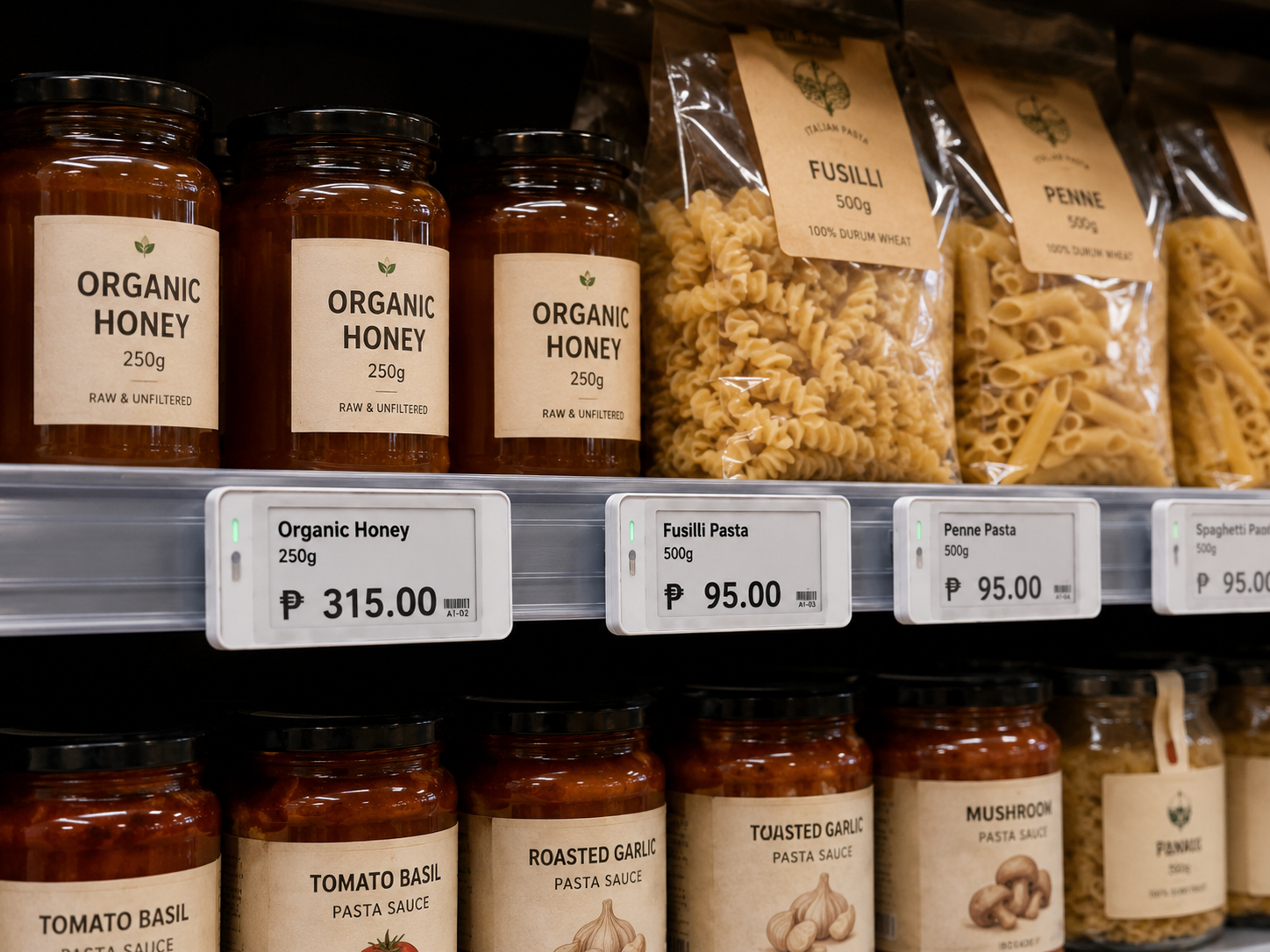
These are the digital displays attached to each shelf. Many modern ESL products use e-paper or e-ink displays that remain easy to read while using very little power.
Communication infrastructure
The labels communicate with the retailer’s system through secure wireless infrastructure. The exact communication technology depends on the ESL platform and store environment.
ESL management platform
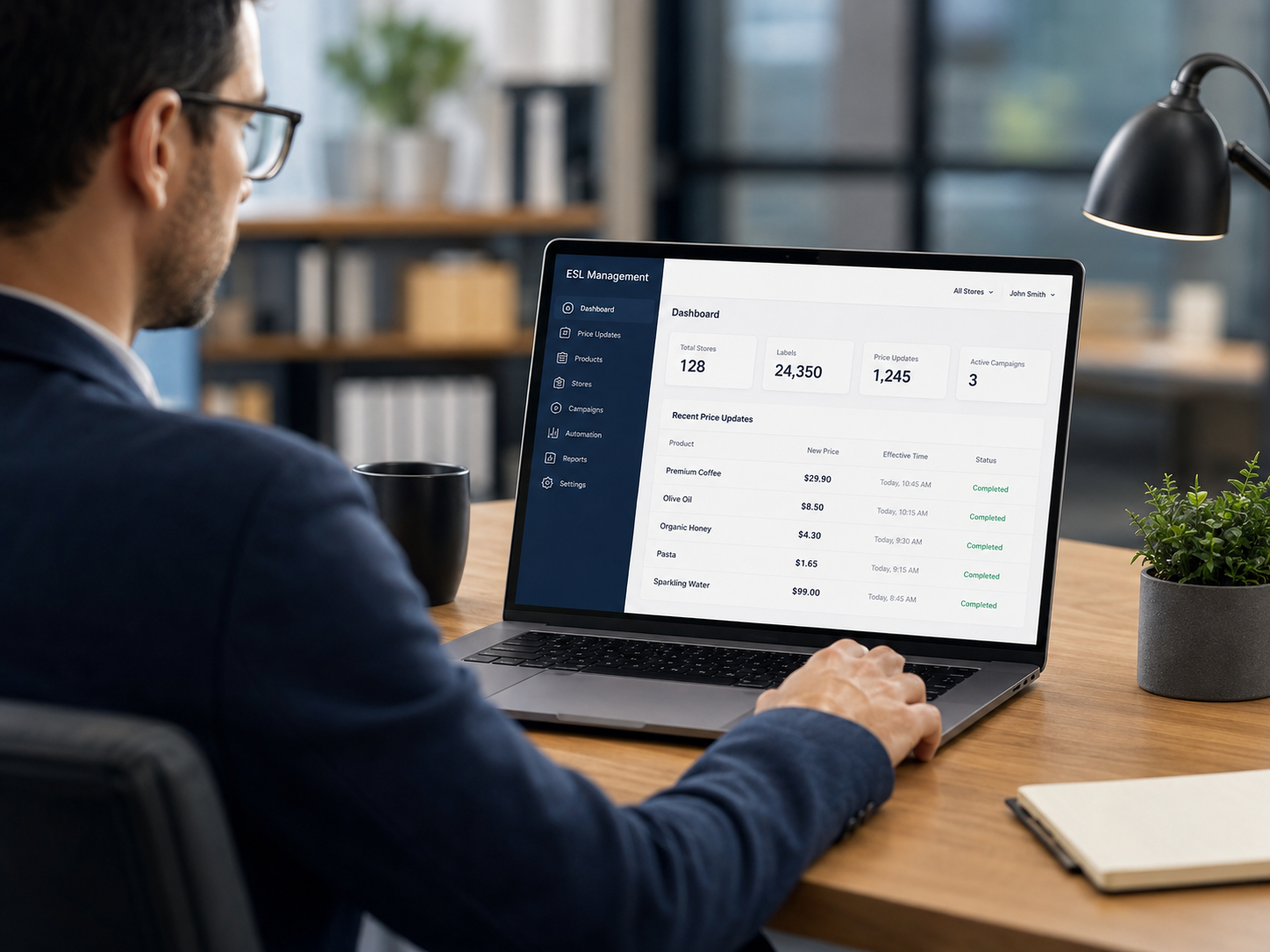
The management platform controls the information displayed on each label. Administrators assign tags to products, manage templates, and coordinate changes from a central dashboard.
POS or ERP integration
For larger retailers, the greatest operational value comes from integration with point-of-sale systems, ERP platforms, inventory systems, product databases, and pricing management tools. When source data changes, updated information can be pushed to the corresponding label.
Electronic shelf labels vs. paper price tags
For a small store with few products and infrequent price changes, paper labels may still be sufficient. The economics change as SKU volume, update frequency, and branch count increase.
The main benefits of an ESL system are:
- Speed: prices and promotions can be updated much faster.
- Accuracy: shelf pricing can stay aligned with centralized data.
- Efficiency: employees spend less time replacing paper tags.
- Scalability: thousands of labels can be managed through one platform.
- Flexibility: product information and promotions can be changed digitally.
Who can use electronic shelf labels in the Philippines?
Supermarkets and grocery stores
Grocery retailers manage large SKU counts and frequent promotional pricing, making them one of the strongest ESL use cases.
Pharmacies and convenience stores
Digital labels can help teams maintain consistent shelf information across extensive product ranges and multiple branches.
Electronics and hardware stores
Labels can display price, specifications, promotional details, QR codes, and financing information beside complex products.
Department stores and warehouses
ESL technology can standardize pricing across departments and also support warehouse locations, product identification, picking assistance, and inventory workflows.
How to evaluate ESL cost and return on investment
The cost of an electronic shelf label system depends on the number and size of labels, display technology, wireless infrastructure, software, installation, integration requirements, and number of branches.
Retailers should evaluate total return on investment rather than only the cost of each tag. Consider employee hours spent changing prices, printing and paper costs, pricing mistakes, promotion setup time, customer complaints, and management time spent coordinating store-level updates.
The most useful question is not simply “How much does each label cost?” but “How much does our organization currently spend managing shelf pricing manually?”
Choosing an electronic shelf label supplier in the Philippines
An ESL project involves more than purchasing digital price tags. Businesses should evaluate whether a provider can support:
- Store assessment and system design
- Wireless infrastructure
- Label configuration and template setup
- POS, ERP, inventory, or product database integration
- Employee training and technical support
- Multi-branch deployment
A successful implementation depends on how well the hardware, software, network, and existing retail systems work together. For Philippine retailers, local implementation and technical support can be just as important as the ESL hardware itself.
Planning your electronic shelf label project
Begin with a store assessment that identifies the number of SKUs and labels, store layout, current POS or ERP platform, frequency of price changes, branch count, and integration requirements. This information provides the foundation for an appropriate ESL architecture and deployment plan.
Explore Nex Cambro Gen’s electronic shelf label solution to see how centralized updates work from system to shelf.
Ready to automate retail pricing?
Talk with Nex Cambro Gen about an electronic shelf label consultation, product demonstration, or customized quotation for your Philippine retail operation.