Electronic Shelf Labels in the Philippines: A Smarter Way to Automate Retail Pricing
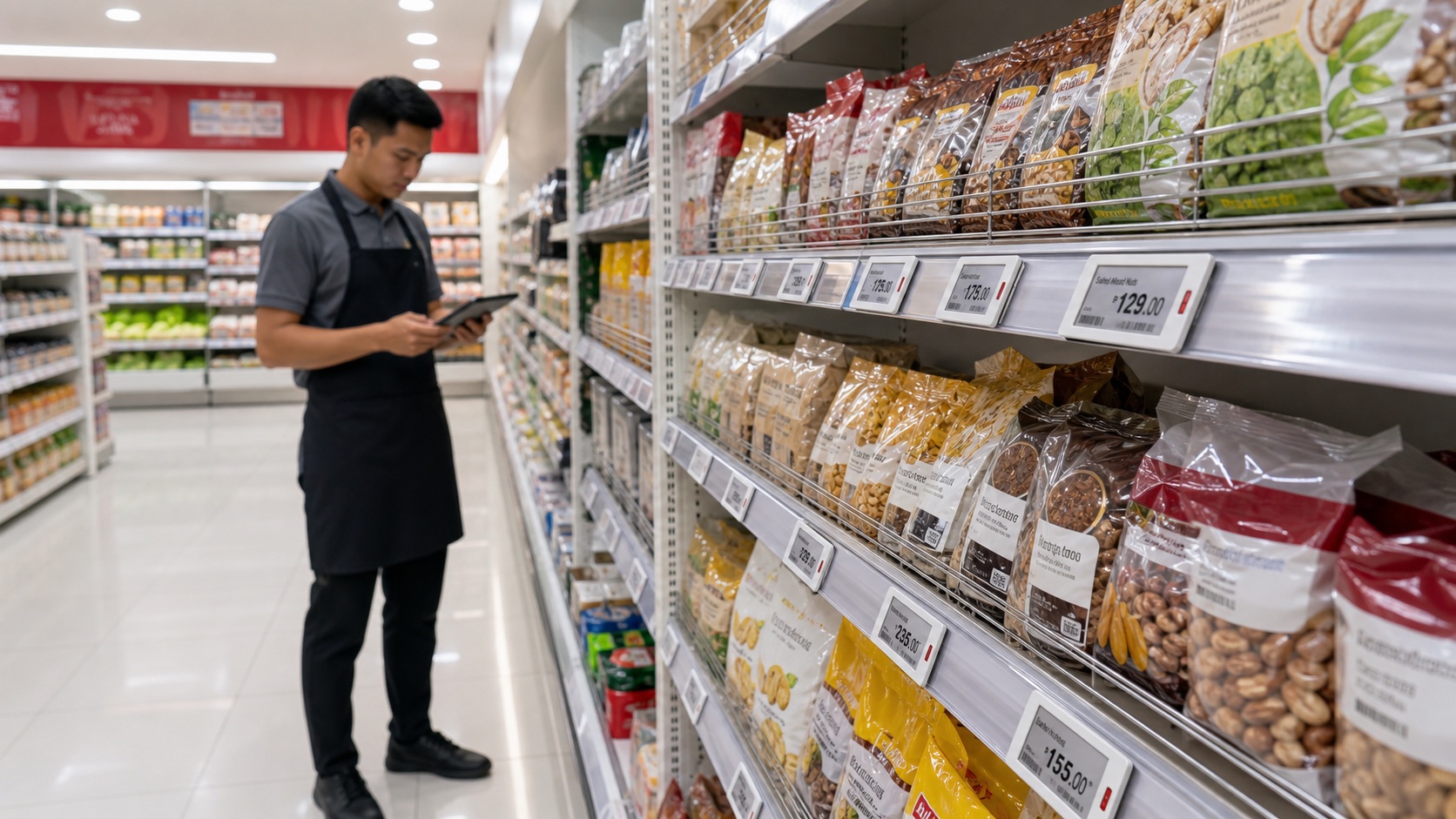
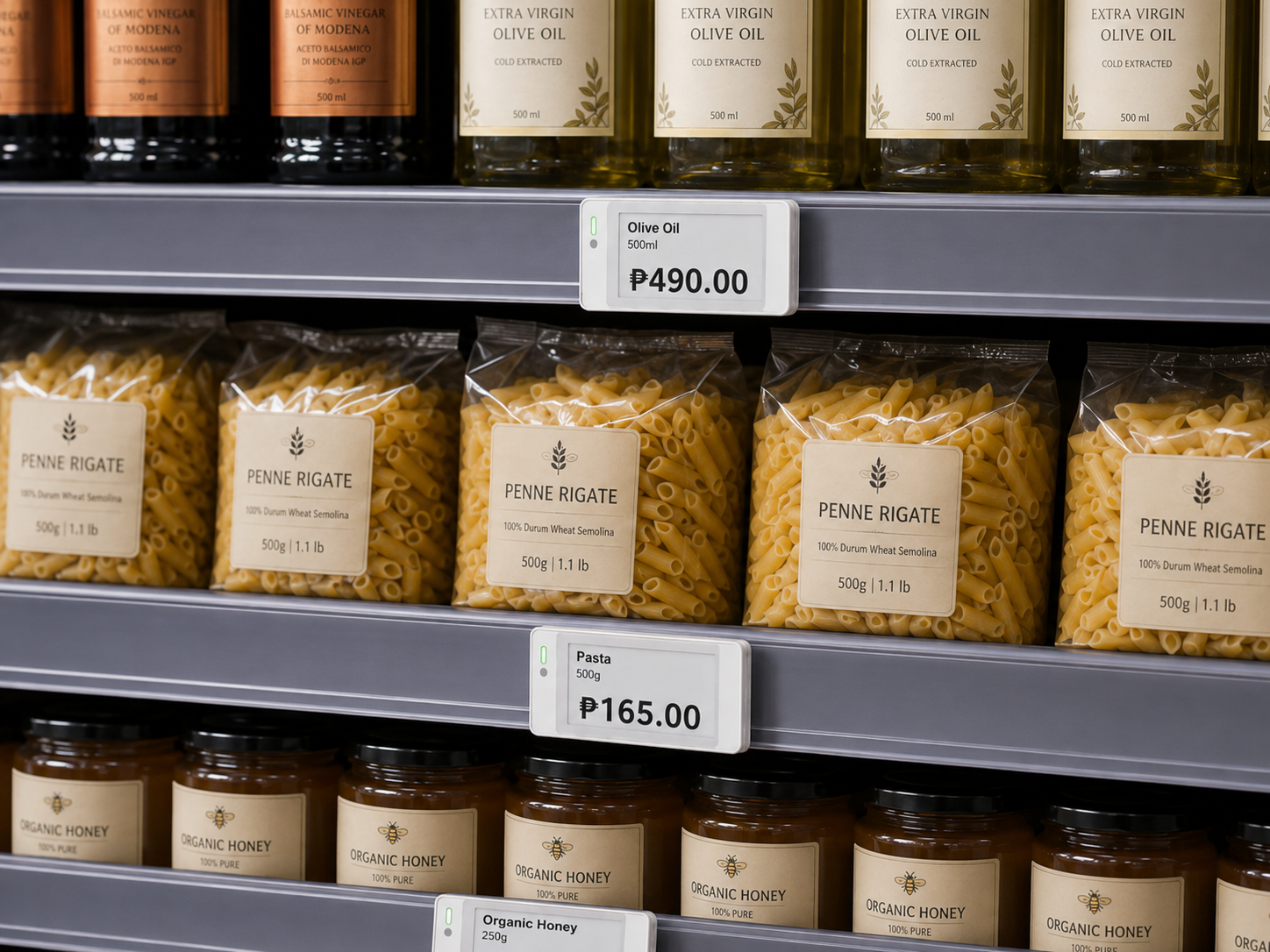
Digital shelf labels, also known as electronic shelf labels (ESLs), are changing how retailers manage pricing at the shelf. Instead of manually replacing paper tags, stores can update prices and promotional information digitally from a central system—helping teams respond faster while keeping shelf information aligned with retail operations.
For Philippine retailers managing large product ranges, frequent promotions, or multiple branches, this creates a more scalable approach to everyday price management. Store teams can spend less time printing and replacing labels while pricing teams gain a clearer path from an approved change to what customers see in-store.
Paper labels may appear inexpensive because they are familiar. At scale, however, their real cost includes employee hours, printing, promotion delays, pricing inconsistencies, repeated checking, and the opportunity cost of assigning store teams to administrative work.
What are digital shelf labels?
Digital shelf labels are electronic displays installed along retail shelves to show product prices, promotions, and other product information. They are commonly referred to as electronic shelf labels or ESLs.
Unlike traditional paper tags, digital shelf labels can receive updates from a central management platform. This creates a connected link between the retailer’s approved pricing or product data and the information displayed at the shelf.
How do digital shelf labels work?
A typical ESL environment connects the retailer’s pricing or product database with digital labels deployed across the store. At a high level, the process has three steps:
- Update: Authorized pricing or product information is changed through the retailer’s connected management system.
- Transmit: The approved information is securely sent through the ESL infrastructure to the correct labels.
- Display: Each assigned shelf label refreshes to show the latest price, promotion, or product information.
This overview explains the workflow without covering every system component. For a deeper technical explanation of labels, wireless infrastructure, management software, and retail-system integration, read our guide to how electronic shelf label systems work.
Why digital shelf labels matter now
ESL adoption in the Philippines is still developing, which gives retailers an opportunity to evaluate the technology before connected shelf operations become commonplace. Early adoption should not mean deploying technology for novelty. It means identifying a recurring operational problem and implementing a system that can address it consistently across one store or an entire network.
For retailers with high SKU counts, frequent price changes, multiple promotions, or several branches, the limitations of paper labels become more visible as the business grows. Electronic shelf labels can help create a pricing process that scales with the organization rather than adding more manual work.
Five reasons Philippine retailers should consider ESL implementation
1. Make shelf prices easier to keep accurate
Customers expect the price displayed on the shelf to match the price at checkout. When paper labels and point-of-sale data are updated through separate processes, inconsistencies can occur. An integrated ESL deployment can connect shelf-edge information with an authorized source of pricing data, helping store teams maintain greater consistency.
Better alignment can reduce avoidable disputes at the counter and strengthen customer confidence in displayed prices. It also gives managers a clearer process for confirming whether scheduled changes have reached the shelf.
2. Launch promotions without the paper-label scramble
A weekend sale can require hundreds of labels to be printed, sorted, distributed, installed, checked, and removed after the campaign. The work becomes more demanding when promotions vary by store or begin at a specific time.
ESLs allow approved changes to be prepared centrally and distributed digitally. Retailers gain the flexibility to execute promotions faster while reducing the physical effort involved in every campaign. This can be especially valuable during holiday periods, clearance events, supplier-funded promotions, and frequent category updates.
3. Give store employees more time for customers and operations
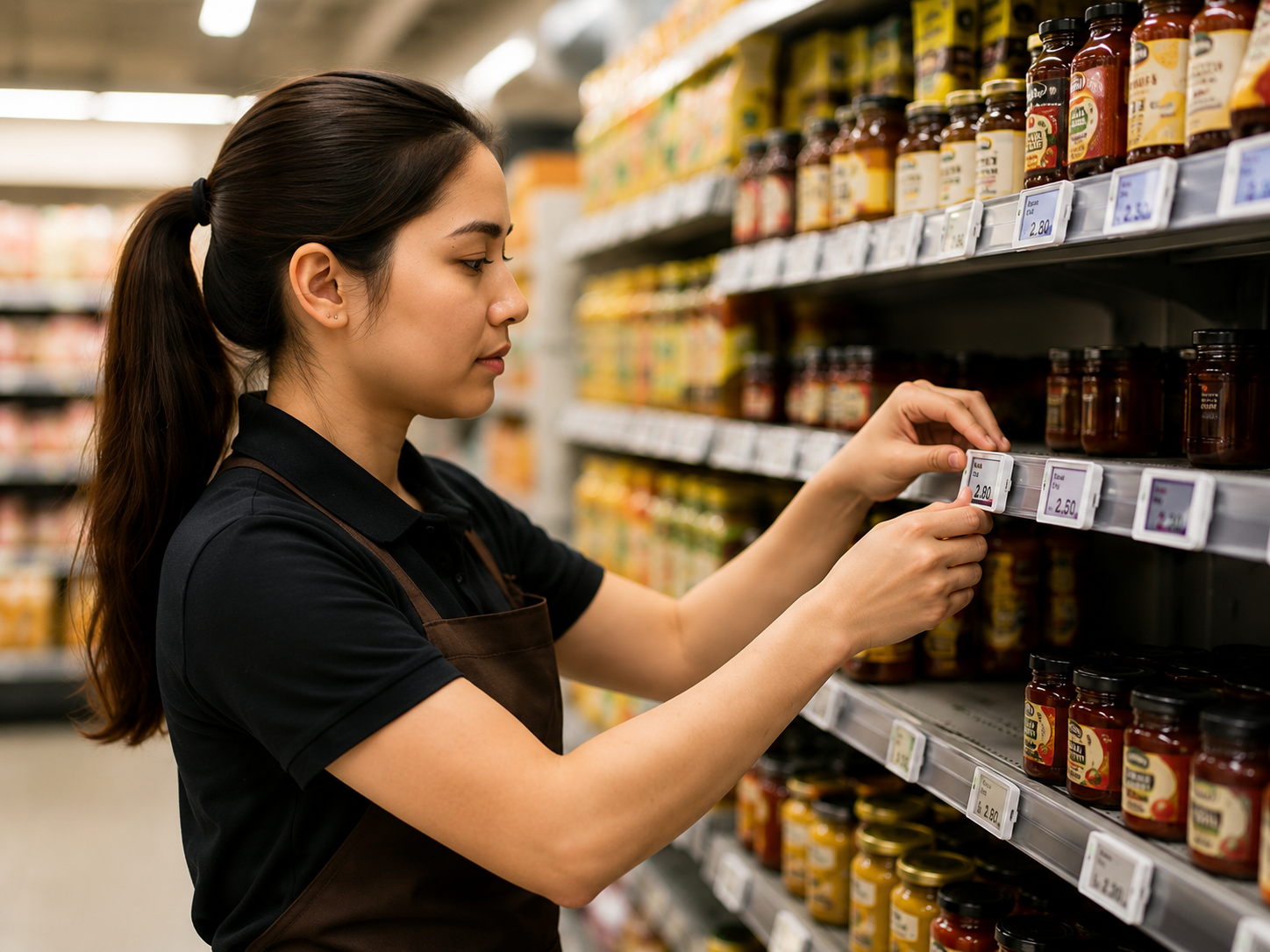
Every hour spent replacing shelf tags is an hour unavailable for replenishment, merchandising, inventory checks, customer assistance, and other work that directly affects the store experience. Electronic labels do not eliminate the need for store teams, but they can remove a repetitive task from their workload.
The business case becomes stronger when labor savings are measured across many SKUs, price cycles, branches, and operating years—not only during a single update.
4. Standardize execution across branches
Multi-branch retailers need promotions and price changes to appear consistently across locations. Paper-based execution depends on printing, delivery, local scheduling, and manual confirmation in every store. Central ESL management can give head-office teams a more coordinated way to control templates, assign product information, and distribute approved updates.
This does not replace governance. It improves the mechanism through which governance is carried out.
5. Build a more adaptable shelf experience
A shelf label can communicate more than price. Depending on the selected platform and label format, retailers may display promotions, product details, QR codes, barcodes, unit pricing, stock messages, or other useful information. Standardized digital templates can also create a cleaner and more consistent presentation across departments.
This flexibility gives retailers room to improve the shelf experience over time without redesigning and reprinting every label for each new use case.
Digital shelf labels vs. traditional paper price tags
Both methods communicate pricing at the shelf, but the way retailers manage them is different.
| Traditional paper tags | Digital shelf labels |
|---|---|
| Individually printed and replaced | Updated electronically |
| Requires manual shelf changes | Managed through a connected platform |
| Promotion changes require new tags | Promotional information can be updated digitally |
| Printing remains part of ongoing operations | Reduces dependence on printed labels |
| Difficult to coordinate across many locations | Supports centralized multi-store management |
For retailers operating larger stores or multiple branches, centralized management can make frequent pricing and promotional changes easier to coordinate.
Where digital shelf labels fit in Philippine retail
Retail environments in the Philippines range from individual specialty stores to supermarkets, pharmacies, convenience stores, electronics retailers, and multi-branch operations. Digital shelf technology is particularly relevant where teams regularly manage:
- High numbers of SKUs
- Frequent price changes
- Recurring store promotions
- Multiple branches or departments
- Product-information updates
- Centralized retail operations
The right implementation depends on the retailer’s existing POS or ERP environment, store layout, product volume, update frequency, and operational requirements. For this reason, ESL deployment should be approached as a retail systems integration project, not simply as a replacement for paper labels.
The hidden cost of continuing with paper
Paper tags remain appropriate for some small retailers with limited products and infrequent updates. For larger or faster-moving operations, the relevant comparison is not the purchase price of paper against the purchase price of an electronic label.
Retailers should calculate the full cost of the existing process:
- Employee hours used to print, sort, install, verify, and remove labels
- Paper, toner, printer maintenance, and label supplies
- Delays between price approval and shelf execution
- Pricing discrepancies and the time required to resolve them
- Management effort spent coordinating updates across branches
- Missed or shortened promotional selling time
- Customer frustration when displayed and checkout prices differ
The better question is not “How much does one electronic label cost?” It is “What does our current shelf-pricing process cost every month, and will that cost grow as we expand?”
What should retailers consider before deploying ESL?
Before introducing digital shelf labels, retailers should evaluate how the system will fit into their current operations.
Existing retail systems
Identify how pricing and product information are currently managed through POS, ERP, inventory, or product-information platforms. Integration requirements should be confirmed before selecting a deployment approach.
Store and SKU volume
The number of stores, shelves, products, and daily price changes influences label quantities, infrastructure requirements, project staging, and ongoing management.
Label requirements
Different products and shelf environments may require different label sizes, display formats, mounting options, or durability characteristics.
Network infrastructure
Reliable communication between the management platform and shelf labels is essential. Store layout and existing network conditions should be assessed as part of system design.
Pilot testing and rollout
A controlled pilot can validate integrations, templates, wireless coverage, operational workflows, and employee training before a broader multi-store rollout.
Deployment and support
Installation, configuration, integration, staff enablement, monitoring, and ongoing technical support should be considered as parts of one project rather than disconnected purchases.
A proper assessment helps ensure the technology supports the retailer’s workflow instead of adding another disconnected system. Explore Nex Cambro Gen’s electronic shelf label solutions in the Philippines to see how connected updates can move from system to shelf.
Frequently asked questions
Are digital shelf labels and electronic shelf labels the same?
Yes. The terms commonly describe electronic displays installed on retail shelves for digitally managing prices and other product information. Electronic shelf label is often shortened to ESL.
Can digital shelf labels display more than prices?
Depending on the selected platform and label capabilities, they can also display promotions, product details, QR codes, barcodes, unit pricing, and other useful shelf information.
Can electronic shelf labels connect to POS or ERP systems?
ESL platforms can integrate with retail management systems, but compatibility, data structure, and integration requirements depend on the retailer’s existing technology environment.
What types of retailers can use digital shelf labels?
Digital shelf labels can support supermarkets, pharmacies, convenience stores, electronics retailers, specialty stores, hardware stores, and other businesses managing shelf-based products.
Are digital shelf labels suitable for multiple store locations?
Centralized ESL platforms can support multi-location environments, making them relevant to retailers managing pricing, promotions, and product information across several branches.
Connected retail planning
Ready to explore digital shelf labels?
Moving from printed price tags to a connected shelf environment starts with understanding your stores, existing systems, pricing workflow, and deployment goals.